What is a static QR code?
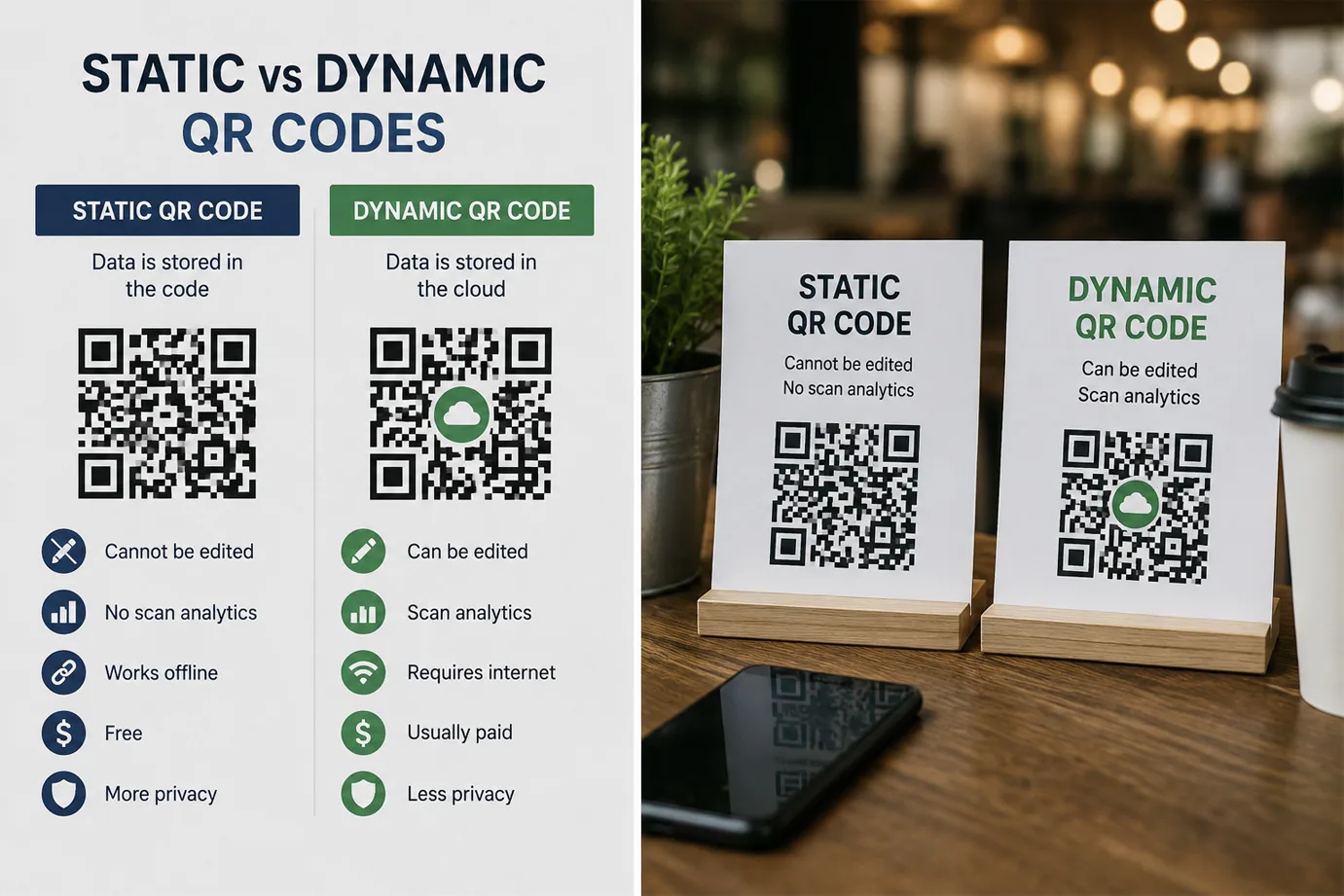
Static and dynamic QR codes can look almost identical when printed, but they behave differently behind the scenes.
A static QR code stores its final data directly in the QR pattern. Once you create it, that information cannot be changed.
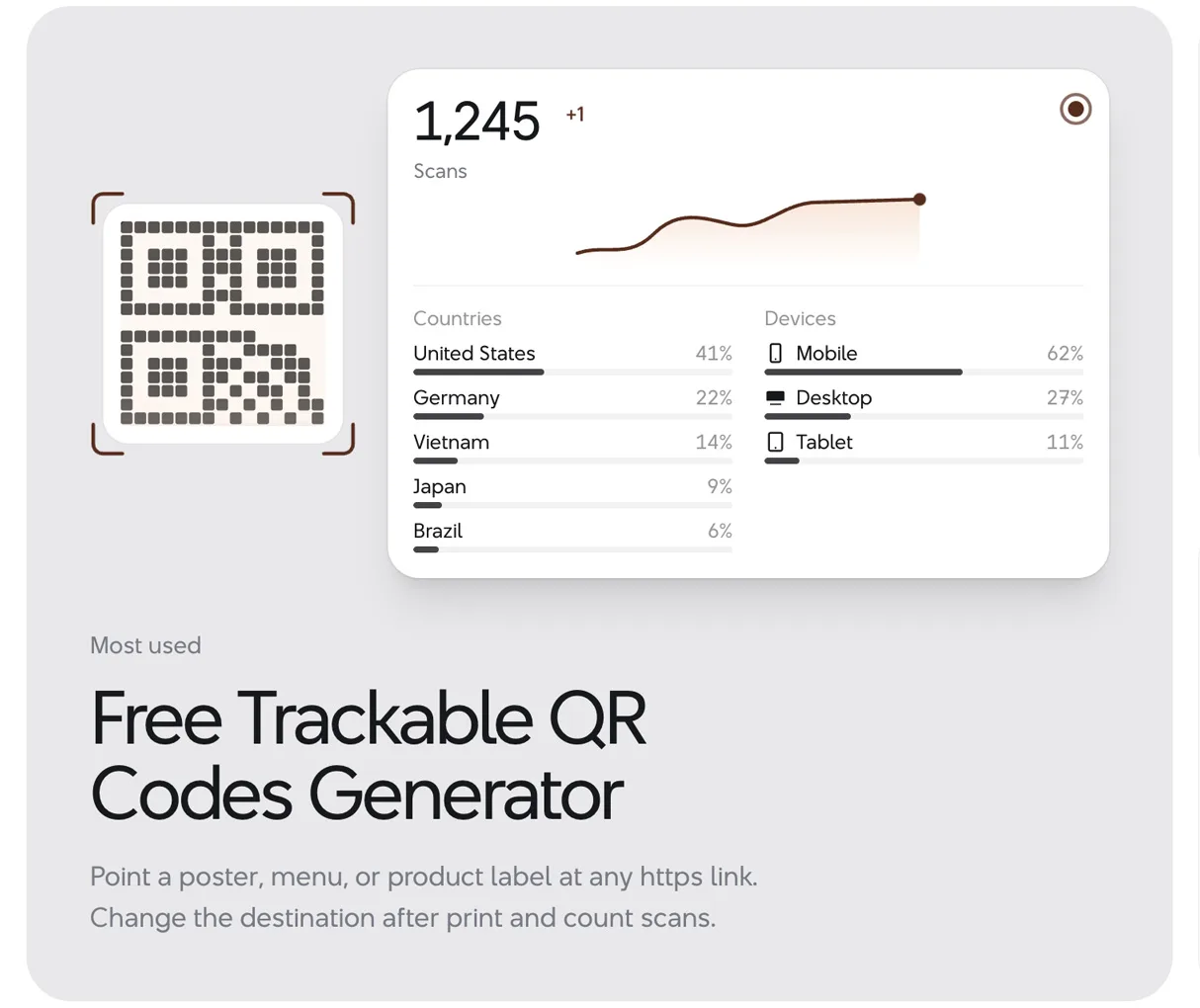
A dynamic QR code usually stores a short redirect URL. The service behind that URL sends the person scanning it to your chosen destination. Because the destination is managed separately, you can change it later and, depending on the service, collect scan statistics.
So which should you use?
Choose static when the information is permanent and you do not need tracking. Choose dynamic when the destination may change, you want scan analytics, or replacing printed material would be expensive.
That simple rule covers most cases. There are a few details worth knowing before you print 5,000 labels.
What is a static QR code?
A static QR code puts the actual payload inside the QR symbol.
Suppose you create a QR code for:
https://example.com/menu
That complete URL is encoded into the pattern. A phone scans the code, reads the URL, and opens it.
There is no redirect service required between the QR code and the destination.
Static codes can store more than URLs. They can contain plain text, WiFi credentials, phone numbers, email data, SMS details, vCards, locations, payment information, and other supported QR payloads.
You can create these types with the free QR code generator.
The important limitation is permanence. Once a static code has been printed, you cannot edit what is encoded inside it. If the information changes, you create another QR code.
For something permanent, that is often perfectly fine.
What is a dynamic QR code?
A dynamic QR code normally contains a short URL controlled by a QR or link management service.
Imagine your printed QR code contains:
forqrcode.com/l/example
That link can redirect a visitor to your current menu, promotion, registration page, PDF, or another destination.
The printed QR code stays the same. You change what happens after the short link is opened.
This also makes tracking possible. The redirect server receives the request before sending the visitor onward, so it can record information about the scan according to the service's features and privacy practices.
ForQRCode's URL QR code generator supports both static and dynamic URL codes. Static URLs can be downloaded directly, while saving a URL as a dynamic link allows later destination changes and scan statistics.
Technically, "dynamic QR code" does not describe a separate QR symbology. The QR symbol is still a QR Code. The dynamic behavior comes from the web redirect encoded inside it.
QR Code itself is standardized under ISO/IEC 18004. The current published ISO/IEC 18004:2024 specification covers the symbol format, encoding methods, dimensions, error correction, decoding and related requirements. ISO/IEC 18004 QR Code specification ISO
Static vs dynamic QR codes at a glance
Feature | Static QR code | Dynamic QR code |
|---|---|---|
Final data stored in QR pattern | Yes | Usually no |
Uses a redirect | No for a direct URL | Usually yes |
Change destination after printing | No | Yes |
Scan analytics | No built-in tracking | Usually available |
Needs QR provider to keep resolving | No | Yes |
Can work for WiFi, text, vCard and similar payloads | Yes | Usually focused on URLs |
Account required on ForQRCode | No | Yes |
Good for permanent information | Yes | Yes |
Good for campaigns | Basic | Better suited |
Provider dependency | Minimal | Higher |
The table makes dynamic look like the obvious upgrade, but that is not always the case.
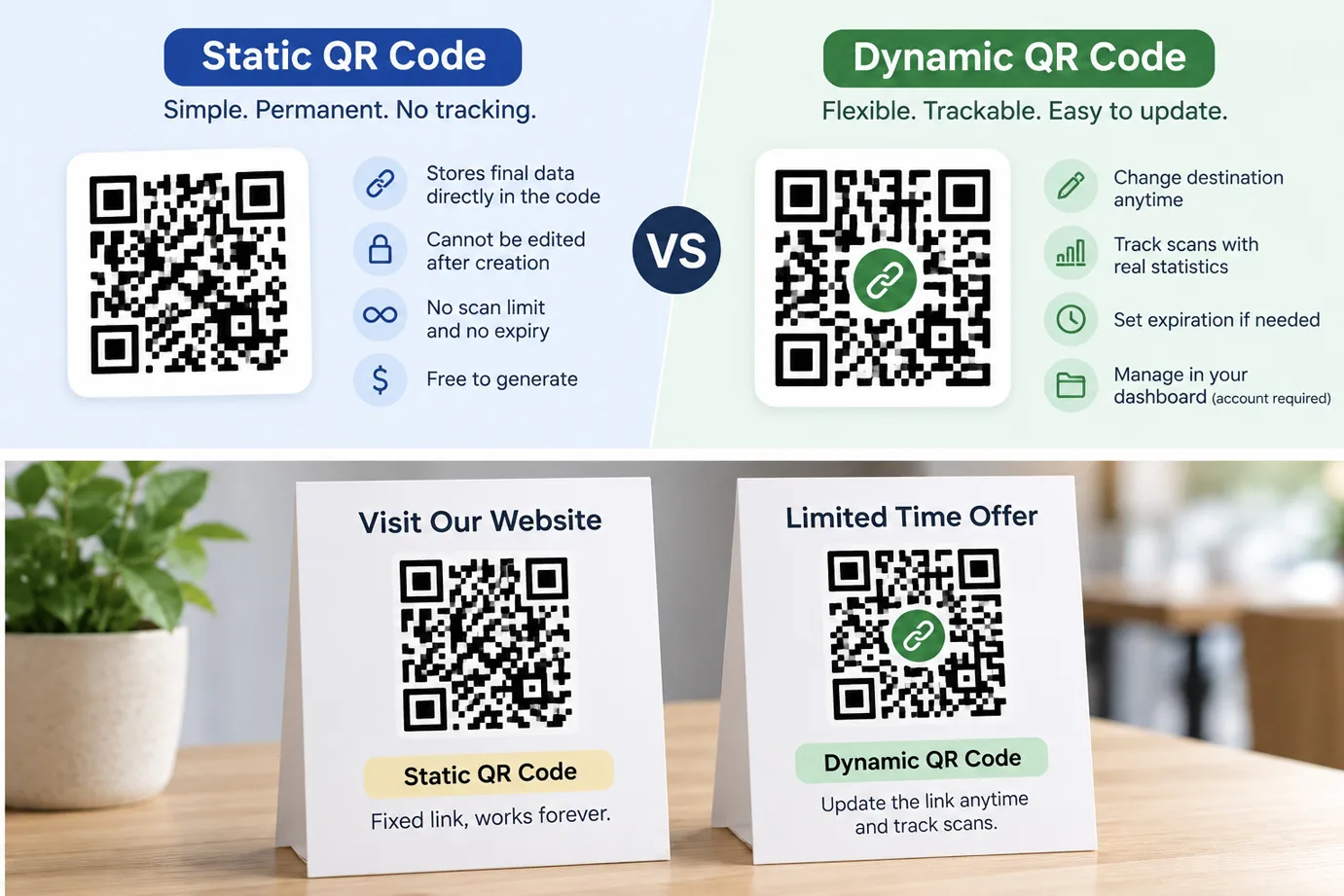
Static codes have a useful advantage: independence.
When a static QR code makes more sense
Static is usually the better choice when you know the content will stay the same.
A WiFi code is a good example. The QR pattern can contain the network name, password and security type directly. There is little reason to add a web redirect unless your use case specifically needs one.
The same applies to a phone number, contact card or fixed text.
Static also works well for a URL you control and expect to keep.
Suppose you own:
example.com/contact
If that URL is part of your website structure and you plan to maintain it, a direct static QR code is simple. The scan does not rely on a QR management service continuing to operate.
ForQRCode states that its downloaded static QR codes encode the payload in the pattern and do not depend on ForQRCode's servers afterward.
That's useful for permanent signs, archived documents, equipment labels and other materials that may stay around for years.
There is less machinery involved.
When a dynamic QR code earns its keep
Dynamic codes become more useful as soon as uncertainty enters the project.
Think about a restaurant printing new table cards. The QR code points to a menu PDF today, but the restaurant may move the menu to a different page next month.
With a static code, changing the URL means printing new cards.
With a dynamic code, the restaurant can keep the same printed code and update the destination.
The same applies to:
marketing posters
event signage
product packaging
seasonal campaigns
printed catalogs
real estate material
advertisements that stay in circulation
Dynamic links are also useful when you care about scan activity.
If 2,000 flyers go out, you may want to know whether anyone used the QR code. A static code by itself cannot report that. A dynamic redirect can record visits before sending users to the destination.
ForQRCode accounts support analytics for saved dynamic links, with plan limits and features described on the pricing page.
Do static QR codes expire?
The QR pattern itself does not have an expiration date.
If a static code contains https://example.com, the pattern will continue to represent that address.
What happens after the scan is another matter.
If the domain expires, the page is deleted, or you restructure the site without a redirect, the QR code still scans correctly. It simply opens a destination that no longer works.
This distinction matters because people sometimes describe a broken destination as an "expired QR code." In a static QR code, the code may be completely intact.
ForQRCode says its static codes do not expire and have no scan limit.
Can dynamic QR codes expire?
A dynamic QR code has one extra dependency: the redirect service.
The printed QR symbol can remain perfectly readable, but someone still has to operate the short URL it contains.
That could depend on an active account, the provider remaining online, and the terms of the service.
ForQRCode's terms make this distinction explicit. Static files no longer depend on its servers after download. Dynamic codes rely on a ForQRCode link, so the service and relevant account need to remain operational for that redirect to work.
This is not necessarily a reason to avoid dynamic QR codes. It is a reason to think about how long your material will remain in circulation.
A three-week event campaign and a plaque expected to stay on a building for 15 years have very different requirements.
Which one is better for tracking?
Dynamic.
The reason is straightforward. Tracking needs a request that can be counted.
A dynamic code sends the scanner through a server-controlled URL. That server can record the request and then redirect the visitor.
Depending on the platform, analytics can include scan counts and other information derived from the request.
Static QR codes do not have a built-in reporting channel. A static code containing your own website URL can still be measured through your website analytics, but that is website traffic measurement rather than tracking performed by the QR code itself.
You can learn more about QR payloads and how different code types work in the QR code guide.
What about privacy?
Tracking changes the privacy picture.
A static QR code containing a direct URL can take the scanner straight to the destination site. If it contains text or WiFi credentials, it may not need to contact a website at all.
A dynamic code first contacts the redirect provider.
ForQRCode's privacy policy says its dynamic codes and short links can collect scan time, device type, referrer and approximate location derived from IP address so statistics can be shown in the dashboard.
If you use dynamic QR codes for customers, employees, students or event visitors, understand what your provider records and whether your own privacy notices need to account for that data.
This is especially relevant when scan analytics are part of the reason you chose dynamic in the first place.
Is one type easier to scan?
Neither static nor dynamic is automatically easier for a phone to recognize.
Scannability depends heavily on the QR pattern itself, physical size, contrast, printing and the amount of encoded data.
A dynamic code can sometimes produce a simpler pattern because it may encode a relatively short redirect URL instead of a long destination URL.
DENSO WAVE explains that QR versions range from 21 × 21 modules up to 177 × 177 modules, and more encoded data can require more modules. DENSO WAVE's QR Code technical overview QRCode.com
That does not mean every short URL QR will scan better than every long one. Final size and design still matter.
Whichever type you choose, test the actual output before printing.
Can you convert a static QR code to dynamic later?
Not if it has already been printed with the final destination encoded inside it.
A static QR pattern cannot be rewritten remotely.
You can create a new dynamic QR code pointing to the same destination, but the physical static codes already in circulation will remain static.
There is one useful exception in practice. If the static QR code points to a URL on a domain you control, you can change what that URL does on your own server.
For example, a static QR code might permanently encode:
example.com/menu
You could later change the content served at that address or make it redirect elsewhere.
The QR code itself is still static. You simply control its destination.
That is a handy middle ground for organizations that maintain their own websites.
Which type should you use for business cards?
It depends on what the card links to.
A static code works well for a permanent company website or vCard. There is no need to introduce a redirect just because the QR code sits on a business card.
Dynamic makes sense if you expect the destination to change or want scan statistics from cards handed out at different events.
But remember the lifespan of a business card. One may sit in a desk drawer for several years.
If the dynamic link later stops working, the printed card cannot repair itself.
What about menus?
Menus are a strong case for dynamic URLs if the destination may move.
Restaurants change platforms, restructure websites and replace PDFs. Keeping the printed QR code unchanged can save a reprint.
If you own a stable URL such as restaurant.com/menu, however, a static code pointing to that address can also work very well. You update the page rather than the QR code.
Sometimes the simplest solution is the best one.
Static or dynamic for product packaging?
Think about how long the packaging may remain in circulation.
For short-lived promotional packaging, dynamic codes give marketing teams more room to change campaigns and measure scans.
For instructions, compliance information or permanent product documentation, a static URL on a domain you control can reduce dependence on an outside redirect provider.
If the QR code is being printed by the tens of thousands, decide before production. Changing your mind afterward means changing the artwork.
A simple decision test
Ask yourself two questions.
Will the encoded destination need to change?
If yes, dynamic is usually the safer choice.
Do I need QR-specific scan analytics?
If yes, dynamic is again the natural fit.
If both answers are no, static is probably enough.
You might still choose dynamic for management convenience, but there is little reason to add a dependency you do not need.
Frequently asked questions
What is the main difference between static and dynamic QR codes?
A static QR code stores its final information directly in the QR pattern. A dynamic QR code usually contains a redirect URL whose destination can be managed separately.
Can you edit a static QR code?
No. Once generated, the data represented by a static QR pattern cannot be changed. You must create a new code. If the static code points to a web address you control, you can change the page or redirect at that address.
Can you edit a dynamic QR code after printing?
Yes, provided the QR service supports destination editing and the dynamic link remains active. The printed pattern stays the same because it points to the managed redirect.
Can static QR codes track scans?
A static QR code has no built-in scan tracking. If it points to your website, you may still measure visits using your own web analytics.
Do dynamic QR codes need internet access?
For a URL-based dynamic QR code, yes. The phone needs network access to reach the redirect service and final website.
Are dynamic QR codes always paid?
No. Pricing depends on the provider. ForQRCode currently includes a limited number of saved codes, short links and analytics on its Free plan, with larger limits and more link features on Pro.
Is a dynamic QR code a different QR Code format?
No. "Dynamic" describes how the encoded URL is handled after scanning. The underlying symbol still follows QR Code encoding rules.
The practical choice
Use static QR codes for information that should stay fixed: WiFi credentials, text, contact details, permanent URLs and similar data.
Use dynamic codes when the destination may change or when scan measurement is part of the project.
There is no prize for choosing the more complicated option. A static QR code with a stable destination can keep doing its job for years without depending on a QR management server. A dynamic code buys flexibility and analytics, but that flexibility comes from an active redirect service.
Decide based on what should happen after the code is printed. That's the part you cannot easily undo.